Engine-derived ROI benchmarks for Tahoe-area short-term rentals, single-family rentals, and small commercial properties. Numbers come from running real fixtures through the Cost Seg Smart engine, same engine that produces your actual study. Studies from $495.
Operated by Cost Seg Smart. Studies are IRS-aligned with engineer review included. 5 fixture benchmarks computed May 2026.
Numbers above are engine-estimated outputs from running 5 representative fixtures, not promises about what your specific property will produce. Results vary based on actual property condition, year built, renovation history, county assessor data quality, and rental treatment (STR vs LTR). Full per-fixture table, neighborhood breakdown, and downloadable CSV/PDF on the Tahoe cost seg benchmarks page.
Lake Tahoe is the most unusual cost-seg market in the U.S. — the only major STR destination split across a state line where one side decouples from federal §168(k) and the other has no state income tax at all. This is the only thing that matters strategically, and most owners don't think about it until their CPA sees the addback on their California return.
The South Shore and West Shore (El Dorado and Placer counties, California) decouple. A $100,000 federal accelerated deduction produces a real federal-tax benefit but doesn't reduce your California liability in the same year — California requires the addback on Schedule CA (540), and the basis depreciates over the regular schedule for state purposes. For a Bay Area buyer in California's top 13.3% bracket, that means roughly one-third of the headline savings is timing, not magnitude.
The North Shore and East Shore (Washoe and Douglas counties, Nevada) don't decouple — they don't even tax. Federal §168(k) at 100% is the entire deduction story. Same property profile, same engine output, but the after-tax dollars are materially different depending on which shore you're on.
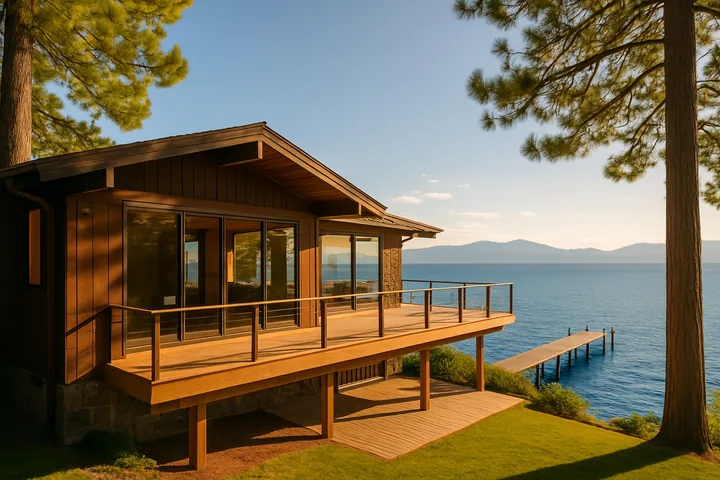
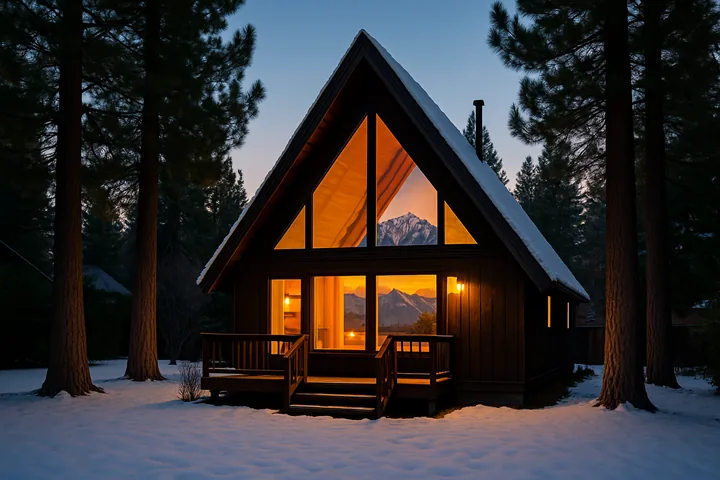
The second factor that's distinctive: property archetypes are unusually heterogeneous. Tahoe holds 1970s A-frame cabins (typically heavy renovation cost segregation drives the math), mid-century lakefront homes with substantial dock infrastructure (15-year land improvements), luxury Incline Village SFR (high absolute basis, IVGID capital assessments to layer in), and ski-adjacent Truckee mountain homes (different STR economics than lakefront).
Decoupling: California taxpayers must add back the federal bonus depreciation deduction on Schedule CA (540) and depreciate the California basis on the regular MACRS schedule. This creates a permanent timing mismatch, not a tax-saving — the federal acceleration is real but the California portion of your liability is unaffected. For high-income CA buyers ($1M+ income), the after-tax math should assume only the federal deduction is real.
Verify with your CPA. State tax conformity rules for federal §168(k) bonus depreciation are adjusted frequently, multiple states have modified their treatment two or more times in the past decade. The general framing on this page reflects our understanding as of May 2026, but you should always verify current-year treatment with a qualified CPA or tax attorney before relying on specific dollar projections for your situation.
These aren't rough estimates. Each fixture was run through the same engine that produces your actual study, RSMeans 2024 base costs, BLS PPI time index, county assessor land allocation, IRS Pub. 946 / Rev. Proc. 87-56 MACRS classification, 100% bonus depreciation per OBBBA.
| Purchase price | $850,000 |
| Depreciable basis | $533,120 |
| Land allocation | 37.3% |
| 5-year reclassified | $95,706 |
| 15-year reclassified | $33,770 |
| Total reclass | 24.8% |
| Purchase price | $1,450,000 |
| Depreciable basis | $923,795 |
| Land allocation | 36.3% |
| 5-year reclassified | $180,020 |
| 15-year reclassified | $56,626 |
| Total reclass | 26.2% |
| Purchase price | $2,200,000 |
| Depreciable basis | $1,714,680 |
| Land allocation | 22.1% |
| 5-year reclassified | $357,456 |
| 15-year reclassified | $102,172 |
| Total reclass | 27.5% |
| Purchase price | $750,000 |
| Depreciable basis | $580,875 |
| Land allocation | 22.6% |
| 5-year reclassified | $109,990 |
| 15-year reclassified | $37,560 |
| Total reclass | 25.9% |
| Purchase price | $1,050,000 |
| Depreciable basis | $665,700 |
| Land allocation | 36.6% |
| 5-year reclassified | $69,836 |
| 15-year reclassified | $45,851 |
| Total reclass | 17.4% |
Cost-seg ROI varies more by neighborhood than by city. Tahoe's 5 sub-markets each have their own land-allocation pattern and property archetype:
| Neighborhood | Typical value | Typical land allocation | Profile note |
|---|---|---|---|
| South Lake Tahoe (CA) | $825,000 | ~26% | California-side base market — A-frame and 1970s SFR converted to STR. CA decoupling applies. Heavy STR market, El Dorado County permit regime active enforcement. |
| Tahoe City / North Shore CA | $1,150,000 | ~30% | Placer County CA side, slightly higher land allocation due to lake-proximity scarcity. Same decoupling treatment as South Lake. |
| Incline Village (NV) | $1,900,000 | ~34% | Nevada side, no state income tax. Luxury north shore — IVGID (Incline Village General Improvement District) infrastructure factors into capital assessments. |
| Stateline / Crystal Bay (NV) | $950,000 | ~28% | Casino-corridor and lake-adjacent. NV no-tax position. Mixed condo and SFR stock — Heavenly Resort base proximity affects ADR. |
| Truckee (CA, near Tahoe) | $1,050,000 | ~22% | Slightly inland from the lake — Donner Lake / Northstar feeder market. Lower land allocation than lakefront. CA decoupling applies. |
Methodology note: "Typical land allocation" reflects baseline patterns for the sub-market. For ultra-premium or resort-tier inventory where reconstruction cost exceeds 2.0× the implied depreciable basis after subtracting baseline land, the engine applies a premium land floor (~50%) to keep the study within audit-defensible territory. This means individual fixture engine output may exceed the neighborhood typical, especially for resort-tier ski-in/ski-out, beachfront, or view-premium product where land scarcity dominates value. See the /data/ page for per-fixture land-source attribution. Results vary substantially by specific property condition, renovation history, and assessor records.
Permitting regime varies by county. South Lake Tahoe (El Dorado County) has an active Vacation Home Rental (VHR) ordinance with permit caps, neighborhood density limits, and renewal-tied compliance — STR-intent buyers should verify a property's permit history before underwriting. Placer County (Tahoe City, Kings Beach) has its own permit system. Washoe County (NV — Incline Village) has lighter regulation. Douglas County (NV — Stateline) recently tightened STR permitting in some neighborhoods. Material participation under §469 is harder than it looks in Tahoe because most STR owners use professional management (Vacasa, Tahoe Getaways, local operators) — the >100-hour-and-more-than-any-other-person test usually fails when a manager runs day-to-day. We assume conservative 5-year hold-period profiles in advisory ranges absent documented self-management.
For the full IRS-rule reference layer (§168(k), §469 material participation, state conformity), see irsdepreciationrules.com, our open reference site.
Yes — significantly for California-side owners. The federal 100% bonus depreciation deduction reduces your federal tax liability the same way regardless of which shore your property is on. But California §168(k) is decoupled: California requires you to add back the federal bonus on Schedule CA (540) and depreciate the basis on the regular MACRS schedule for California purposes. A South Lake Tahoe owner in California's top 13.3% bracket only gets the federal portion of the headline number in Year 1. An Incline Village owner sees no state addback because Nevada has no state income tax — they capture the full federal benefit and pay no state income tax on the rental income either. For two otherwise-identical properties on opposite shores, the effective Year-1 tax savings differs by roughly 11–13% of the accelerated amount.
Not the cost-seg study itself — the engine's component analysis and MACRS classification don't depend on permit status. But the VHR permit regime affects two underwriting assumptions: hold-period economics (permits are tied to properties, capped citywide, and subject to neighborhood density rules — a buyer whose STR plan assumes 10+ years of rental income should verify permit history and current city policy) and material participation (the VHR regime's professional-management norm makes the §469 active-participation test harder to clear). Our advisory ranges for South Lake Tahoe assume conservative 5-year STR hold profiles unless the buyer is self-managing.
The Incline Village General Improvement District levies recreation fees and capital assessments that vary by property. Recurring recreation fees are ongoing operating expenses, not basis additions. But IVGID capital assessments for shared infrastructure (beaches, ski hill, golf, recreation facilities) are typically capitalized — a buyer at closing inherits the assessment basis pro-rata, and a cost-seg study can sometimes identify portions of IVGID-funded improvements that qualify for 15-year land improvement classification. The arithmetic is small relative to the structural deduction, but it's a real piece of the basis your CPA shouldn't miss.
Truckee typically produces higher reclassification ratios as a percentage of purchase because its land allocations run lower (22–24%) than lakefront Tahoe (26–34%). South Lake Tahoe properties produce larger absolute dollar deductions per fixture in our engine output because purchase prices run higher. But Truckee is not a Tahoe — different ADR profile, different STR demand (more ski-feeder, less lake-feeder), different permit regime (Town of Truckee separate from Placer County). The CA decoupling applies the same way to both. If you're choosing between the two for STR purposes, the cost-seg differential is rarely the deciding factor; the operating ADR and occupancy economics matter more.
Higher than average — 24–32% in our engine outputs — but mostly because of renovation cost segregation rather than the original structure. Original 1970s A-frame construction doesn't reclassify well (the integral structural frame, basic plumbing, original electrical all sit in the 27.5-year residential category). The 5- and 15-year work comes from the post-2000 renovations these properties have typically had: updated electrical (some 5-year), kitchen and bath modernization (FF&E 5-year), decking and hardscape (15-year), upgraded HVAC, and STR-specific furnishings. The engine treats renovation_cost as a separate allocable pool — for a heavily renovated 1970s Tahoe A-frame, that pool can contribute 50–65% of the total accelerated component.
More general cost-seg questions answered at costsegsmart.com/faq/.
Cost Seg Smart studies are IRS-aligned, engineering-reviewed, and include written audit defense. Pricing is transparent and starts at $495 for residential properties under $300K, full pricing on the main site.